

That annoying itch on your scalp is more than just a tickle. It’s a sign that your scalp is trying to tell you something. If left unchecked, it can cause frustration, discomfort, and even scalp issues over time.
When it comes to locs, there are three main causes of an itchy scalp. Understanding the root of the problem is essential before trying to fix it, since treating the wrong cause can actually make things worse.
Important Note: This information is not medical advice, and it isn’t meant to diagnose or treat anyone. It’s always best to do your own research, and if you’re unsure about your particular situation, consult a medical professional or dermatologist.
Click here to download your free anti-itch recipes!
The Three Main Causes of an Itchy Scalp
1. Microbes
Everyone has microbes on their scalp, including a yeast-like fungus called malassezia. In some cases, this fungus grows out of control and feeds on scalp sebum, leading to dandruff and other scalp problems.
You’re more likely to deal with this if:
- You have a history of dandruff.
- You live in a humid climate.
- You have naturally oily skin.
2. Dry Scalp
A dry scalp can result from a variety of factors:
- Hormonal changes.
- Harsh shampoos that strip away natural oils.
- Washing with very hot water.
- Hard water with high mineral content.
A quick way to check for hard water is to look at your shower. If you notice a white film on the walls or showerhead, that’s mineral buildup.
You’re more likely to experience a dry scalp if:
- You live in a dry climate.
- You don’t have a history of dandruff.
- Your skin and hair in general tend to feel dry.
3. Allergens in Hair Products
Certain preservatives and ingredients in hair products can trigger contact dermatitis and scalp irritation. One common preservative is labeled MI or MCI, often found in cosmetics, hair care, and even laundry detergents.
If your skin itches after wearing freshly washed clothes, you may have an allergy to this ingredient.
How to Relieve Scalp Itchiness Naturally
Identify the Root Cause
Before treating the problem, it’s important to know what’s actually causing the itch.
For example, if you have a dry scalp but mistake it for dandruff, using an anti-dandruff shampoo will only dry out your scalp further and make things worse.
A dermatologist can help you get an accurate diagnosis before you move forward with natural remedies.
If the Cause is Microbes
Use oils known to reduce malassezia overgrowth:
- Tea tree essential oil
- Clove essential oil
- Mint essential oil
- Oregano essential oil
Mix a few drops of one of these oils with a carrier oil such as jojoba oil (which closely resembles the scalp’s natural sebum). Massage the mixture into your scalp, leave it on for about 30 minutes, and then wash it out. This can be done once a week, or every 3–4 days if needed.
It’s also important to keep your scalp as dry as possible, since malassezia thrives in humid environments. After working out, wearing a hat or helmet, swimming, or washing your hair, always make sure your scalp is thoroughly dried using the lowest heat setting on a blow dryer.
If the Cause is a Dry Scalp
Several adjustments can help relieve dryness:
- Switch to a gentler shampoo that doesn’t strip natural oils.
- After washing your locs, follow up with a moisturizing scalp treatment.
- Add antioxidants to your shampoo, such as aloe vera gel, brewed green tea, rosemary essential oil, or argan oil.
- Use a balancing rinse after washing, such as diluted apple cider vinegar, diluted lemon juice, green tea, or direct aloe vera gel on the scalp. Allow it to air dry.
- If you have hard water, consider adding a water softener to your showerhead.
If the Cause is Allergens
Check the ingredients in your hair products and avoid those containing MI or MCI. Pay attention to whether your scalp or skin reacts after washing, since that may indicate a sensitivity to certain ingredients.
Click here to download your free anti-itch recipes!
An itchy scalp with locs can come from microbes, dryness, or allergens. The key to finding relief is first identifying the true cause, and then choosing natural methods that target the problem directly.
With the right adjustments—whether that’s using antimicrobial oils, switching to gentler shampoos, balancing the scalp with rinses, or avoiding allergens—you can reduce irritation and support a healthier scalp.
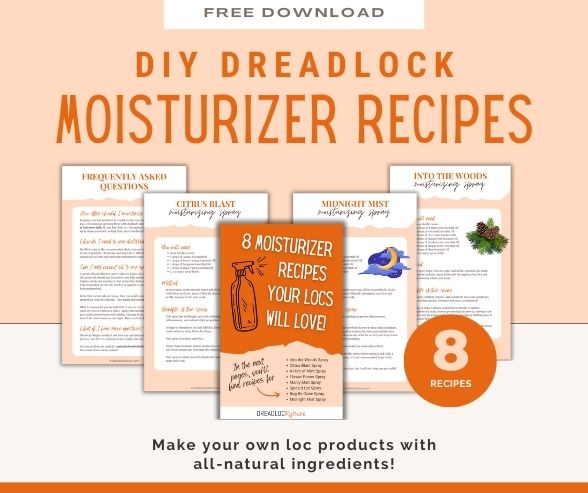
Download the 8 Dreadlock Moisturizer Spray Recipes!
Please fill out the form to receive the download in your inbox.
If there’s an error or the download doesn’t come through, send me a message at book@dreadlockulture.com and I will happily send it to you. 🙂