

Starting your loc journey is both an exciting and transformative experience.
Looking back on my 6+ year journey, there are several things I wish I had known before making the leap. The only “loc mentor” I had back when I started was my loctician but she didn’t specialize in my hair type.
Believe it or not, it was difficult back then to find answers to a lot of questions so I did what anyone else probably would have done- I learned through trial and error.
In this post, I will discuss all the things I wish I knew before starting my journey. Hopefully, anyone starting their loc adventure will find these insights valuable and not make any of the same mistakes I did.
1. Address Scalp Conditions Prior to Getting Locs
Treating any existing scalp conditions before starting your loc journey can set you up for success. Conditions like dandruff, psoriasis, or seborrheic dermatitis can be more challenging to manage once locs are formed.
I didn’t have scalp issues before locs, but I did once I got them. Itchy scalp and dandruff are two of the most common issues associated with locs, both of which I experienced and resolved with my aloe vera spray (learn how to make it here) and by following the tips I mention here.
If you have any prolonged scalp issues, you may need to go to a dermatologist for specialized treatment.
2. Establish a Loc Care Routine
While locs are often touted as a low-maintenance hairstyle, it’s important to understand that they still require regular care.
Loc’d hair requires a different care routine than loose natural hair. This involves moisturizing, washing, hair detoxes, and root separation and maintenance.
Understanding and committing to these requirements from the beginning can lead to healthier, more beautiful locs in the long run.
This post discusses my daily, weekly, monthly, and bi-annual loc maintenance routine.
3. Maintenance Techniques Should Stay Consistent
Knowing which maintenance technique works best for your hair type and sticking to the same method and routine throughout your loc journey is super important.
Whether you crochet, interlock, or retwist, consistency helps your locs form properly and maintain their structure.
Tip: Always retwist in the same direction to prevent weakening your locs.
4. Root Care is Important
One of the biggest mistakes loc wearers make early on in their journey is manipulating their roots too often.
At best, over-twisting or putting too much pressure on the hair roots can lead to thinning and breakage at the scalp. At worst, it can cause permanent hair loss in the long run.
Wait a minimum of 6 to 8 weeks between root maintenance sessions. This will give your roots time to grow and strengthen without weakening the hair follicle.
5. Choose a Loctician Carefully
If you decide to seek professional help to start or maintain your locs, you must choose a skilled and experienced loctician.
I recommend always looking through their social media accounts and reading reviews if they have any. Don’t hesitate to ask them questions about their experience, techniques, and if they use any products— In the case that they do, I would also suggest asking them to see the ingredients list of those products.
If there’s a product you don’t want on your locs, make sure they respect your decision to refrain from using it. If they insist on using it anyway, find a different loctician.
Once you find a loctician you like, make sure you know exactly what they will charge you for the services you’re getting. During my last root maintenance appointment, I made the mistake of not asking my loctician what her current prices were for crochet maintenance.
At the end of my appointment, I was shocked when she told me the cost was $500 (a $250 jump from the previous year) … had I known she charged so much, I would have never gone to see her. But I learned from this mistake and never went back.
6. Be Picky About Products
When it comes to using products in locs, less is more.
Excessive product usage can lead to buildup, which can be difficult or impossible to remove. Remember to use products sparingly and always always always read the labels.
Many ingredients are known to cause buildup in locs, specifically those that are not water-based, including wax, creams, and commercial gels. Avoid those from the beginning.
In this post, I discuss all the products and ingredients you should never use on your locs.
7. DIY Products Are the Best
Before buying any products, I highly recommend you make your own.
By creating your own products, you have full control over the ingredients, ensuring that you’re not introducing anything that could cause buildup or damage to your locs.
Another bonus is that it saves you a lot of money too! Making your own loc products is easy and it costs a fraction of the price of anything you buy in a store or online.
Simple ingredients like aloe vera, essential oils, and carrier oils can be combined to create effective, loc-friendly products. In this book, I provide 39 effective and loc-friendly recipes to revitalize your dreadlocks.
8. Daily Moisturizing is a Must
Moisturizing my locs daily is a practice I wish I had started sooner.
Regular moisturizing helps keep locs healthy, prevents dryness and breakage, and maintains their fresh scent and appearance.
It took me about 10 months to realize I needed to start doing this but the moment I implemented moisturizing as part of my loc routine, I saw a huge improvement in the texture and strength of my locs.
To make a light, water-based moisturizer, simply mix water and essential oils in a spray bottle and mist your locs with it. In this post, you will find 8 of my favorite moisturizer recipes that are sure to keep your locs hydrated without causing buildup.
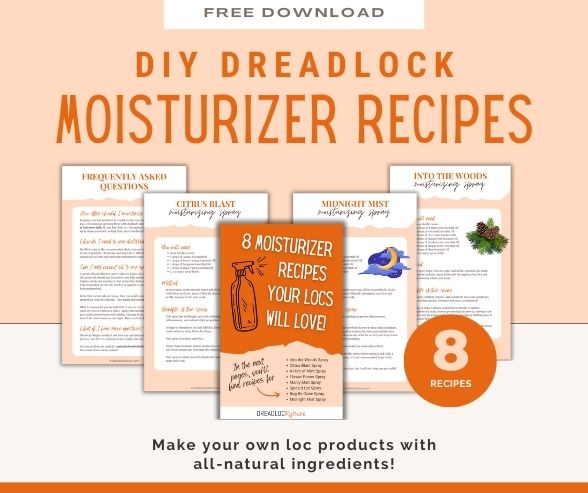
Download the recipes!
Please fill out the form to receive the download link in your inbox.
9. Dyeing Locs is Risky
While coloring locs can be tempting, many loc wearers wish they had known about the potential damage before experimenting with dye.
Chemical dyes can be extremely harsh on locs, leading to dryness, breakage, and even permanent loc damage. Unlike natural loose hair, the chemicals in dye can get stuck in the inner part of your locs, making it nearly impossible to remove or wash off completely.
If you decide to color your locs, consider using natural alternatives like henna or seek professional help from a loctician experienced in coloring locs.
10. Protect Your Locs While Sleeping
Wearing a bonnet or other protective covering while sleeping is essential for maintaining neat and lint-free locs. It also helps prevent frizz, keeps your locs clean, and reduces friction that can lead to breakage.
Before locs, I didn’t even know what a sleeping bonnet was. Now, every time I see lint in my hair, I am reminded about how I wish I had known better and adopted this habit since the start of my journey.
11. Dry Your Locs Properly
Using a microfiber towel for drying locs is a tip I learned right before getting locs and it’s proved to be invaluable. Regular towels can leave lint in your locs, which can be difficult to remove and will affect the appearance of your locs.
Microfiber towels not only prevent your locs from getting lint, but also absorb 7 to 9
Here you can find my exact method and recommendations for drying your locs properly.
12. Understand Maturation Rates
It’s crucial to understand that everyone’s locs mature at a different rate. Factors like your natural hair texture and maintenance routine can influence how quickly your locs form and mature.
Embrace all aspects of the loc journey from the start. This includes accepting and appreciating loops, budding, flyaways, and frizz as natural parts of the process. These characteristics often contribute to the unique beauty of your locs as they mature.
13. Understand Shrinkage
Many new loc wearers are surprised by the amount of shrinkage that occurs during the first year. Understanding that this is a normal part of the process can help manage expectations and reduce frustration.
The amount of shrinkage will vary from person to person as it depends on your hair type and the method you used to start your locs.
In my case, I have caucasian hair and my locs were started with the crochet method. I lost nearly half of my length within the first few months and gained it back after the third year.
14. Patience is Key
Perhaps the most important thing many wish they had known is the importance of patience. The loc journey is a long-term commitment, and the most beautiful results often come with time.
It’s normal to have days where you love your locs and days where you might feel frustrated with them. Understanding that these fluctuations are part of the process can help you navigate the emotional aspects of your loc journey more easily.
Remaining patient and embracing each stage of the loc journey is key. In this post, you will learn 17 tips for staying patient during the messy stages of locs.
15. Know The Difference Between Admiration and Comparison
One of the most important lessons in the loc journey is learning not to compare your locs to others’. Every person’s hair is unique and locs will form and mature differently for everyone.
While it’s okay to admire other people’s locs, it’s important to distinguish between appreciation and comparison. Use others’ locs as inspiration, but remember that your loc journey is unique to you.
Focus on your own journey and appreciate the unique characteristics of your locs.
In conclusion, starting a loc journey is a unique and personal experience. By keeping these insights in mind, you can approach your loc journey with more knowledge, realistic expectations, and a greater appreciation for the process. Remember, every loc journey is different, and embracing your unique path is key to a satisfying experience.
Download the 8 Dreadlock Moisturizer Spray Recipes!
Please fill out the form to receive the download in your inbox.
If there’s an error or the download doesn’t come through, send me a message at book@dreadlockulture.com and I will happily send it to you. 🙂


