


Dreadlocks grow just as fast as undreaded hair does. At first glance, you may not notice your dreads growing at all. Instead, you’ll probably notice them shrinking since they’re in the starter phase.
This is a normal part of the locking process during which your hair is adjusting to the knots. Once your locs mature, you should begin to notice them getting longer.
During the first few months of my loc journey, my hair shrunk to about half. I recovered the length in 2 years. Now that I’m 6 years in, my hair is down past my hips. The growth has been insane!
In this blog, you will learn the process of how locs grow and what you can do to make them grow faster naturally.
This post is all about how fast dreadlocks grow.
One of the most important lessons that the dread journey teaches us is the art of waiting.
Beautiful dreadlocks require A LOT of patience.
No one gets perfect locs overnight, except for synthetic extensions, and there’s not much you can do about that.
Anyone who has them will tell you that they take a great deal of time to form and mature.
On the hard days when your hair looks like a disaster, think about this: Babies are not conceived and born right away. A baby needs 9 months in the womb to develop. The same thing goes for healthy dreadlocks.
In this journey, your hair will go through several stages.
These are the different stages of locs:
- In the starter stage, your hair will start to adapt to the changes. You’ll see a lot of unraveling, loops in the knots, and a lot of craziness in general.
Your hair will experience some level of shrinkage, but the amount of shrinkage depends on the method you use to knot your hair (such as crochet, freeform, two-strand twists, etc). Expect this phase to last a few months.
- The next stage is known as the budding phase. Here you’ll notice that your locs are not unraveling as much and new hair is growing at the root.
You can tame the frizziness around your scalp by either getting a retwist. Unless you have someone at home to help you, it may be tricky to do on your own the first few times, so it might be best to go to a professional loctician.
The other way to encourage the roots to form is to palm roll them. While this will not reduce the frizz, it will stimulate the new growth to grow into the loc. Practice palm rolling them in the same direction each time.
- The third stage is the teenage stage. Your locs will be the most rebellious during this time. They’ll have a mind of their own but you will see that they’re morphing into more of a round shape.
- The final stage is the mature stage, also known as the adult stage or rooted stage. I don’t understand why there are a million names to refer to the same thing but anyway, back to the point…
You’ll know you have mature dreads because they’ll be fully knotted, evenly shaped, and have entered into the glorious growth phase.
You won’t need to be doing as much maintenance on them anymore however it’s recommended that you separate the individual dreads once a week to prevent the roots from growing together.
Bottom line: It’s a long-term commitment so let them be. Enjoy the experience of watching them evolve.
Do dreads grow faster or slower than normal hair?
There’s a lot of discussion on whether natural hair gains length at the same rate as loc’d hair.
I used to wonder the same thing. Somewhere down the grapevine, I heard rumors of people saying their locs were growing much faster than their natural loose hair used to.
From a logical perspective, it makes sense that no matter what hairstyle you’re sporting, your hair will grow at about the same rate.
It’s also true, however, that those with mature dreadlocks notice their hair gaining length more rapidly. Let me explain why.
Under normal health circumstances, the average person gains around 6 inches of hair every year.
When our hair is not dreaded, we tend to mistreat it more. For instance, we wash it and brush it daily. We dry or straighten it with high heat, all the while adding products loaded with chemicals. Occasionally we dye it with a chemical treatment too.
As a result, we end up with damaged, dehydrated, and singed hair which needs to be trimmed every 4 to 6 months.
In dreadlocked hair, the new growth is essentially protected and secured within the dread that it’s forming into. Not only are you not trimming the dead ends, but you’re also not treating nor messing with it constantly (hopefully).
In other words, you get to keep all 6 inches of natural growth!
The hair we shed every day gets trapped inside the dreads, giving the appearance that you have more hair than before.
FIY: If the day comes to brush out your locs, you’ll end up with a massive ball of hair. This is not something to worry about as it is just the shed hair that has fallen out over the years which got trapped in there.
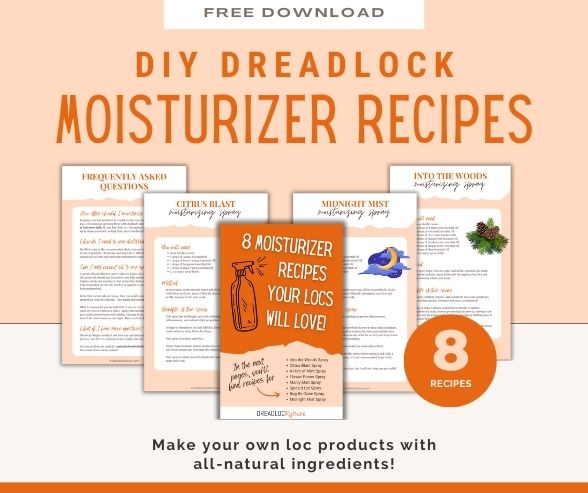
Download the recipes for optimal loc health and growth!
Please fill out the form to receive the download link in your inbox.
How fast do dreads grow in a year?
Once mature, healthy dreads should be growing about 6 inches per year.
But keep in mind that this number is not set in stone. The amount of length your locs gain in a given year will depend on your hair type, how you sectioned your scalp, and your health.
– Your type of hair
Hair texture is unique to every person but as we know, different ethnic groups have varying types of hair (e.g. African American hair vs. Caucasian straight hair).
African Americans have hair that is typically coarse and tightly coiled, which is an advantage to the matting process. African American dreadlocks can become mature within the first six to twelve months.
On the other hand, Caucasian or Asian hair textures are commonly thinner and straight/curly. With this hair texture, you can expect dreads to take around two years to mature.
This is a generalization of course since there are various factors at play.
– How you sectioned your scalp
Dreads will shrink during the first year. How much they shrink depends on how you started your dreads and how thick the separations were made at the root.
Shrinkage is more evident in long hair than short hair.
Thinner dreadlocks will start showing length faster because the hair has a smaller strand to knot itself through. The opposite goes for thick dreads of course.
If you formed them extra tight in the beginning, they may shrink less than if you started with loose freeform dreads.
In my case, used the crochet method and lost about 40% of my original length in the first year. My hair was down to my waist and ended up right below my shoulders. I started regaining length after the second year.
Once your dreads are mature, the shrinking will stop altogether and you’ll notice them getting longer.
Tip: If you don’t want the shrinkage to look as obvious, leave the ends undreaded instead of blunted.
– Your health
Your hair quality, strength, and growth tell a lot about your health.
Long periods of stress can cause your hair follicles to temporarily stop producing the cells responsible for hair growth. Hormonal imbalances can also cause such interruptions.
If you feel this may be an issue you’re experiencing, talk to your health practitioner for a correct diagnosis and proper treatment.
When you’re in good health, your hair will grow strong, shiny, and quickly. Continue reading to learn which foods and supplements will give your hair a boost.
How long will your dreads be in the first year?
During the first year, you can expect your dreads to shrink (oftentimes a significant amount). Your hair strands go through constant back-and-forth movements to achieve maturity.
The looping, irregular knots, and shrinkage are part of the process your locs need to form properly. After the initial months, they will get thicker and start shaping up.
In the meantime, your hair will still be growing at the same rate as usual but remember that it’s just going through the motions of knotting so you won’t see them getting longer.
From the first year (or second) forward, you will gain noticeable length. A lot of people say that this is when their hair starts growing at “super speed.” I couldn’t agree more. That has certainly been the case for me.
I should note that all your locs won’t shrink nor grow evenly. You will probably have a select few that are much longer or shorter than the rest.
There’s no accurate way to predict how much your dreads will shrink since everyone’s process is different, but don’t get discouraged in the beginning and get excited for the growth that is yet to come.

How to make your short dreads grow faster naturally
There are several things you can do to increase the speed of your hair growth. Don’t expect an overnight miracle, but certain improvements in your diet are going to make a difference in your hair health.
1. Eat the right foods
You need to be eating a balanced diet for optimal health and faster hair growth.
These are the main nutrients you should be going after.
- VITAMIN A: Vitamin A is required for cells to grow. When you’re deficient, you may experience hair loss.
Food alone can provide enough of this vitamin that your body needs. I don’t recommend taking supplements because you risk toxicity which can lead to numerous side effects.
Vitamin A is found in dark green veggies (kale, spinach, broccoli), yellow/ orange fruits & veggies (squash, cantaloupe, pumpkin, carrots, sweet potatoes), eggs & dairy products (milk, yogurt), liver, fish, and cod liver oils.
- VITAMIN B COMPLEX: Biotin is the most popular B vitamin for hair growth. The results are more evident when your body is already deficient in biotin, but there’s not much evidence to prove that taking in biotin supplements to surpass what your body requires is effective.
B vitamins can be found in many foods, such as dark green veggies (spinach, broccoli), fruit (bananas, avocado, citrus), cauliflower (raw), mushrooms, meats & seafood (poultry, red meat, salmon and fish), nuts & seeds (peanuts, almonds, sunflower seeds), whole grains (brown rice, millet), dairy products (blue cheese, camembert, cheddar, milk), and legumes (lentils, beans).
Vitamin B12 is only found in animal products so vegans and vegetarians should be taking a supplement in pill form.
- VITAMIN C: Vitamin C is important for collagen to be produced in your body and healthy hair needs collagen. You can find vitamin C in peppers, broccoli, citrus (oranges, lemons, limes), tomatoes, guava, kiwi, berries, and sprouts.
- VITAMIN D: While it’s not yet known what role vitamin D has concerning hair growth, alopecia (hair loss) has been linked to deficiencies of vitamin D. It’s important to include it in your diet for preventative purposes.
Your body produces Vitamin D when it comes into contact with the sun, but it can also be found in food such as mushrooms, cod liver oil, fatty fish (tuna, salmon, mackerel), cheese, and eggs.
- VITAMIN E: Studies have determined a link between Vitamin E and a boost in hair growth.
Vitamin E is found in nuts (almonds, pine nuts, Brazil nuts, hazelnuts, peanuts), vegetable oils (flaxseed, sunflower, corn, soybean, wheat germ), dark green veggies (broccoli, spinach), salmon, avocado, sweet red pepper, kiwi, mango and turnips (raw).
- OTHER MINERALS: Protein, Iron, Silica (found in horsetail herb), and Zinc are linked to hair growth as well.
For a complete list of nutritious foods for healthy locs. click right here!
There are numerous benefits to adding fresh fruits and vegetables to your diet. The main benefit is that you will incorporate vitamins through your food- important nutrients that you won’t get by eating a heavily processed diet.
Make it a habit to add more fresh foods to your meals every day. Raw is usually the best since cooking veggies can remove some minerals and vitamins.
Try to eat clean when you eat out. As tempting as it is to get a side of French fries, opt for a side salad instead.
Juicing is another great way to take in a large number of raw fruits and veggies. This option is a bit of an investment since juicers are pricey and lots of produce is needed to fill one glass of juice- a lot of pulp will be wasted (unless you compost).
If you choose to go this route, I recommend buying a slow-masticating juicer (also known as a cold press juicer). These juicers process the food much slower, extracting the maximum amount of liquid (especially in dark leafy greens).
Centrifugal juicers process the food much faster, leaving a lot of moisture in the remaining pulp. Also, the blade generates heat which oxidizes the juice.
These vitamins are available in supplement form as well. Make sure you talk to your doctor before choosing a supplement you think is right for you, especially if you’re already taking other medications or prenatal supplements.
2. Stimulate your scalp
A great way to increase the blood circulation to your hair follicles is by giving yourself a gentle scalp massage.
Massaging or brushing your scalp with a dreadlock pick for 5 to 10 minutes every day will boost blood flow and encourage hair growth and stronger hair follicles.
Once a week, you can massage your scalp with a blend of hair oils. Mix the essential oils of your choice with a pea size of any carrier oil (like coconut oil, castor oil, olive oils, etc).
3. Nurture and take proper care of your hair
Wash your hair once a week with a residue-free shampoo and moisturize your scalp with aloe vera if your scalp feels dry.
Washing more often than that will remove your hair’s natural oils and cause dryness which can lead to weak and brittle hair.
Many people have experienced thinning dreads and in the worst cases, breakage. Check out this blog to get my favorite moisturizing recipes and learn the best practices to nourish your hair.
Excessive maintenance can also hinder the growth process. Allow your dreads the time they need to take their shape. Tightening them constantly, especially the roots, can cause permanent hair loss.
Give your hair and scalp a break between re-twists. You should be waiting between 6 to 8 weeks at a minimum. The less manipulation the better.
Also, don’t tighten your hair too much when you style it. Constant tugging and pulling can weaken your roots. As your dreads get longer, they’ll get heavier so you want to be doing whatever you can to maximize your hair’s strength in preparation for longer hair.
Finally, protect your hair while you sleep, whether it is by wearing a silk bonnet or using a satin pillowcase. This will reduce frizziness and prevent hair breakage.
4. Relax and sleep
You need a minimum of 7 hours of sleep each night to allow your body the chance to repair itself.
It would be ideal if you could get 9 hours of sleep, but ‘ain’t nobody got time for that’ in this day and age! (I love you if you caught that reference. 😂)
Stress, as mentioned earlier, can slow down your hair growth dramatically or cause it to stop growing altogether.
Take care of yourself and reduce your stress through exercise and calming breathing practices.
I hope these tips help and encourage you wherever you are in your journey. Don’t be upset if your locs aren’t as long as you want them to be yet.
The beauty of having dreads is learning to enjoy every step of the process, even if they’re messy.
Isn’t it a great reminder of how we should live our lives? Day by day. ☺️
This post was all about how fast dreadlocks grow and how to make them grow faster.
Download the 8 Dreadlock Moisturizer Spray Recipes!
Please fill out the form to receive the download in your inbox.
If there’s an error or the download doesn’t come through, send me a message at book@dreadlockulture.com and I will happily send it to you. 🙂
This post was originally published on February 17, 2019. It has since been updated and improved.


18 comments
Hi Nadia, so glad I found this blog. I am Nigerian(west African) and 7 months into my locs journey and I am absolutely loving it. I’m not even worried about the growth, just enjoying javi g them. So, I got advice to mix dry rosemary with Neem oil, castor and coconut oil, steep it for a while and use it daily for my locs, do you think it’s wide, will it help my locs with growth and strength? What about boiled dry rosemary as hair misting spray? Looking forward to seeing more tips from you🤗
Hi Habiba! Aww, thank you! I’m so happy you’re finding it helpful! And I’m excited for you and your loc journey 🙂
Yes, rosemary is amazing! It improves blood circulation and is known for helping hair grow. I definitely recommend boiling rosemary leaves (either fresh or dry) and using that as a daily moisturizer/ misting spray. You would need to keep it in the refrigerator so it doesn’t spoil. It will stay fresh for about a week. If you want a longer-lasting spray, you can mix distilled water with rosemary essential oil.
As for the oil mixture you mentioned, you can do a “cold oil infusion”. To do this, you’ll fill a sterilized jar with dry rosemary and the oils. Let it infuse for 6 to 8 weeks, and then strain it. This oil should last 1 to 2 years. Keep it in a dark and cool area. I recommend applying it once a week. Use about a pea-sized amount and massage it directly onto your scalp. Do not rub it into the locs themselves, because it’ll weigh them down and can cause buildup. I hope that helps! In the next few weeks, I will be posting more content and more recipes! If you have any questions during your loc journey, let me know! I’m always happy to help 🙂
My locs are long (past my belt line). I am having a problem with plaque psoriasis on my scalp. I was given an oil by my doc to use but I don’t like it. Also any suggestions for braiding or wrapping my hair at night? sometimes it is hard to sleep.
Glad to see you are still responding to comments. I’m 6 weeks into my journey and looking forward to the future. Thanks for touching on diet. I also make it a point to mist my hair at least 2-3 times a day 50/50 rosewater and distilled water with a few drops of tea tree and rosemary essential oil. I oil my scalp with a mixture of JBC a bit of olive oil and a few drops of tea tree when I think it needs it. I seal the rosewater mist with a mixture of grapeseed oil with tea tree and rosemary oil when I think it needs it which is approx 1x per day. Grapeseed is extremely light so I am not so concerned about weighing my hair down but again I eyeball what I need. I started my locs from 2 strand twists with a grab-and-go part style while trying to pay attention to the size I want to end up with though I know density plays a part. I did soooo much research and feel like I’m doing what works for my hair. Time will tell. Peace.
Hi! Awesome! All the best on your loc journey 🙂
I’m new to the loc family and it’s pretty fascinating watching the journey form. I have hot flashes and my night bonnet is making them worst. Any tips on protecting my hair at night?
Hi Kay, You could try using a silk pillowcase instead of a bonnet 🙂
Thank u sooo much for d info,my locs r always dry after two days of re locking or washing of my locks n its kind of annoying,don’t know what to do any more .
Hi Casper, You can lightly moisturize them once or twice a day (water + essential oil spray)..or as often as you feel is necessary, so long that you don’t soak them in water and they don’t stay wet overnight. Hope that helps!
I’m from St. Lucia in the caribbean. Thanks for the advice on treating my locs.It’s three years for me and I am enjoying it.
Hi Drucilla! Yay, that’s awesome!
I’m happy to hear you’ve found the site helpful. 🙂
Best of luck on your journey!!
I started my loc journey in October 2020. I still have a loonnngggg way to go but I’m loving it. I have a question though, will my knots (some are big knots) go away or do they stay there for the rest of the loc? Thank you Nadia!!! Love the site it is really helping me understand my loc journey even more!!
Hi Lisa! Yayy, I’m happy to hear that you’re loving the journey and I’m glad you’ve found the site helpful 🙂
That’s a great question. It really depends on your hair texture, your maintenance method, etc. If you’d like, send me a picture of your locs at nadia@dreadlockulture.com and I can give you better insight. 🙂
One small problem, instead using “African american” you should have used blacks, cause African Americans are not the only black people on earth. Black people in other parts of theworld have 4c hair.
Yea, you’re absolutely right! Thank you 🙂
This blog gets me really excited for my loc journey that I just started last weekend. I’m definitely going to be taking your advice. I’m so glad to have run crossed this blog.
Thanks for the tips it really going to helped me im willing to follow it
You’re welcome Leo!