
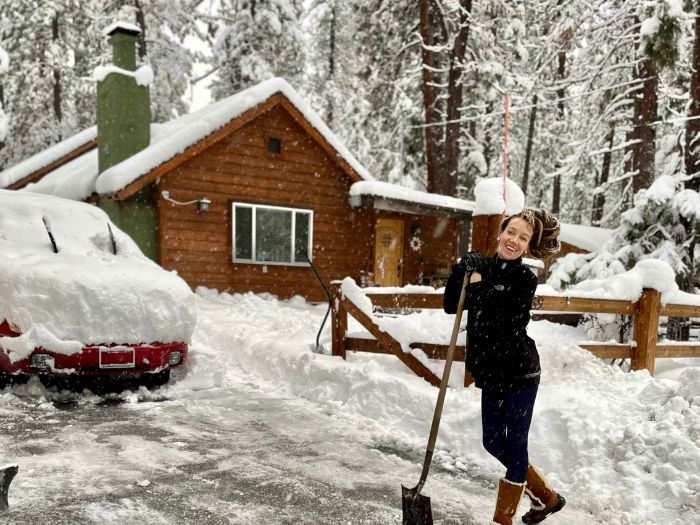
Although not necessarily my favorite season, winter is a beautiful time of year nonetheless. As I write these words, I’m sitting by the fireplace enjoying the snowy view out of my front window.
I shoveled the driveway for two hours this morning and barely cleared ten feet…all I can say is that my body is feeling it! And not just that, my locs and skin are feeling it as well.
Do your skin and hair feel the effects of the cold weather, too?
During the winter season, there is a lot less moisture in the air, especially when the temperatures drop. On top of that, the heating systems in our homes pull a lot of moisture out of the air.
Perhaps you’ve noticed that your hands are dry and your lips are more chapped than usual. But the dryness doesn’t stop there- although we may notice it less, it also occurs on our hair and scalp.
During the first few years of my loc journey, I had no idea how the changing weather was affecting my dreads. But after much trial and error, I developed a winter routine that ensures my hair stays hydrated and healthy through the roughest climate of the year.
In this article, you will learn the effects that the winter weather has on your dreadlocks and I’ll show you exactly how to combat loc dryness during those months.
This post is all about how to maintain locs in winter.

Is cold weather bad for dreads?
The impact of seasonal weather on dreadlocks is something that is oftentimes overlooked.
While the colder months may not pose an immediate threat to your natural hair, its effects can accumulate over time, leading to dry and brittle locs.
During the winter, you can expect the following issues:
- Dry and itchy scalp
- Dry skin, including dry hands and a dry scalp, are among the first places where you’ll notice that your body is lacking hydration.
- Extra frizzy hair
- Dry air and cold winds can exacerbate frizziness, making your dreadlocks more prone to unruliness.
- Split ends
- The lack of moisture in your hair can cause breakage. In the early stages of water deficiency, you may start noticing split ends.
Understanding these issues is crucial for adapting your hair care routine to the seasonal demands. With an appropriate winter routine, you can ensure the long-term health of your dreadlocks.
If these symptoms are left to continue without taking proper care of them now, you risk permanent damage like breakage and weak spot throughout your locs.
How do you maintain locs in the winter?
The main thing you should be concerned about during the winter time is keeping your locs hydrated.
Here are several habits you can incorporate into your new winter loc care regimen.
Stay hydrated
Water is the essence of life. Without it, we wouldn’t survive. To combat dryness, we need to start within. Simply put, we need to drink lots of water.
Most sources agree that we should be drinking a minimum of 8 cups of water per day but during the winter, try to get in another cup or two. Being that it’s cold out, you can substitute herbal teas for plain water.
Keep your hair moisturized
If you’ve been around dreadlock websites and community chat groups long enough, I’m willing to bet that you’ve read about the importance of moisturizing your dreads. But no one talks about adapting your moisture routine to the changing seasons.
So, how do you moisturize locs in the winter? There are several ways you can do this.
Daily moisturizing spray
This is my go-to method because of how simple and easy it is. It involves spraying (or misting) distilled water all over your hair. If you want added benefits, nourishment, and scents, you can add pure essential oils to the water.
I spritz my locs once a day (usually in the morning), however, during the winter, I double up by spraying them twice a day— once in the morning and once in the afternoon.
I recommend you do it as often as you feel your hair needs it. Just remember that a little misting goes a long way… and never go to bed with wet locs.
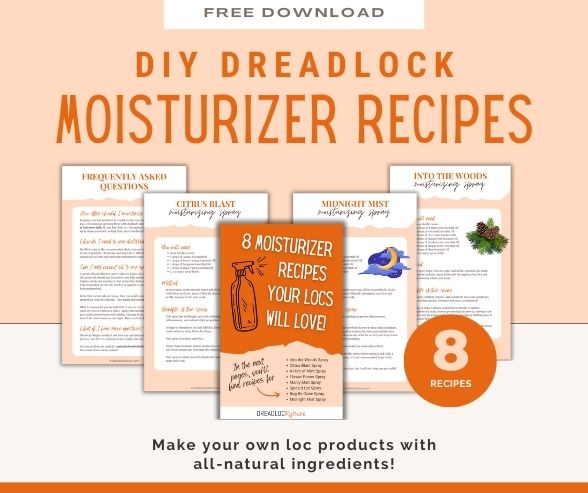
Download the recipes!
Please fill out the form to receive the download link in your inbox.
Steam your locs
Another way to add much-needed moisture to the hair shaft is by steaming your locs.
There are handheld, standing, and hooded hair steamers if you want to buy one. But if you’re like me and don’t want to spend extra money on stuff like that, then you can just dampen your microfiber towel and wrap your hair in it.
A steaming treatment should be done no more than once a week and for 20 to 30 minutes at a time.
Rose water spray
I recently wrote about the benefits of rose water for dreads. Rose water is extremely hydrating and will make a huge difference in softening your locs. If you’re experiencing extreme dryness, you may want to give this a try.
Click here to learn more about its benefits and download the free recipe where I explain how you can make your own rose water spray.
If you’re in the starter phase of your loc journey, use rose water sporadically. Its softening properties can delay the matting process or cause unraveling in those with new locs.
Try deep conditioning treatments
First, let me clear up a myth. Carrier oils are advertised as being a ‘deep conditioner’ in hair care products. While they are indeed amazing for your hair, there’s a misconception that they have moisturizing properties.
The truth is that those oils do not moisturize on their own. They do, on the other hand, seal in the moisture that’s already present within your hair and skin.
This is what makes them so beneficial during harsh winter weather when your hair needs a boost. Once you have applied a hydrating agent, the carrier oil works to seal it in. Makes sense?
Carrier oils on your scalp
Once or twice a week, dampen your head with distilled water, and then give yourself a gentle scalp massage with the carrier oil of your choice. A pea-sized drop for your entire head is a good amount.
Doing this every day is not recommended since it will give you an overly oily scalp, leading to product buildup around your roots and possibly weighing down your locs. Twice a week is the maximum I’d do.
If you have split ends, you can apply a tiny bit of oil to them as well.
TIP: In my experience, the best oil for dreadlocks in winter is olive oil. The following method has given me the best results. Hopefully, it works wonders on your hair as well.
This is what I do to get its maximum benefits.
Massage olive oil on your scalp the evening before you’re planning to wash your locs. After you’ve massaged it for a few minutes, wrap your hair in a shower cap, and then in a silk cap. Wrapping your hair is important so that the oil doesn’t get soaked up by your bedsheets and stays in your skin and hair.
Leave it on overnight and wash it off the next morning.
Hot oil treatments
Once or twice a month, you can do a hot oil treatment in which you apply a warm carrier oil to your scalp. Leave it for 20 to 30 minutes and then wash it off.
For a hot oil treatment, you’ll want to use a lightweight oil like coconut oil, almond, jojoba, olive, sesame, grape seed, or argan oil.
Use oil like a leave-in conditioner
If your hair is dry to the point where it feels crunchy, you can try this method after you’ve washed your hair. Apply a light oil (like grapeseed, apricot kernel, or jojoba oil) to your scalp and run your fingers down your damp locs. Then, let it air dry.
Aloe vera gel
In a previous post, I raved about the wonderful healing plant that is known as aloe vera.
The reason I love it so much is that it works wonders for combatting dryness, itchiness, and other scalp issues, but the best part is that it doesn’t leave residue or product build-up. The leaf pulp is 98.5% water!
Click here to learn more about its benefits. You’ll also find the step-by-step tutorial on how I make my aloe scalp spray by extracting the gel straight from the leaf.
Cover your locs
Cold air and wind pull moisture from your hair and dry it out. To maintain as much moisture within your hair as possible, wear a silk-lined hat, beanie, wrap, silk scarf, or turban when you go outside.
Only use silk and satin materials since these trap moisture and minimize the static electricity in your hair.
You have to be very selective because most winter hats are made of wool, cotton, and synthetic fabrics which do the very opposite— plus, those contribute to lint!
P.S. You should also be covering your locs at night, whether it be with a bonnet or satin pillowcase.
Wash your hair less often
Your hair produces natural oils to combat dryness. Shampoo typically strips some of those oils so it takes a day or two for your scalp to recover.
During the winter season, space out your wash days a little bit. Shampoo your hair with a moisturizing shampoo once every 10 to 14 days instead of once every 5 to 7 days.
Wash your hair with warm water and give it a final rinse with cold water (that is, if you can handle it… I’m kind of a baby when it comes to cold water in general so lukewarm is as far as I take it but the truth is that cold water is the best for dreads).
Cold water seals the cuticle of your hair follicles, thereby preserving the oils and locking the moisture within the hair. Hot water will cause dry hair and scalp, and contribute to frizz, breakage, etc.
Avoid heat styling tools
On your wash day, air dry your locs (if possible). If you need to dry them with a blow dryer, use the cool setting, not high heat. Heat will lead to dry locs.
Brush your locs
Brushing your locs is a fairly new concept for me and may not work the same for all hair types.
My loctician recommended it to me for two reasons. First, it helps distribute oils to the rest of your locs and second, it helps remove lint and dandruff.
Avoid hair dye
Hair dye should be avoided in locs altogether, but if you’ve made up your mind and want to dye them no matter the consequences, then my opinion is not gonna be enough to stop you.
I will say that hair dye (especially chemical-based dye) is extremely damaging to locs and will for sure dry your hair out, so the winter months are probably the worst time for dying them. You’ve been warned. 🙂
Eat Omega 3s and other nutrient-rich foods
Ever heard the saying, “You are what you eat?” The older I get, the more I realize how true this is.
Food is one of the foundational elements that determines our overall health. Eat life-giving foods with nutritious properties and watch your hair get stronger and healthier.
In this article, I list all the nutrients and foods that promote hair growth and other benefits to your locs, including fish, nuts, leafy greens, and more.
Install a humidifier
A humidifier, whether installed in your living room or bedroom, is a great way to increase the moisture levels in your house. This will help you maintain well-moisturized locs and skin.

Tips for maintaining your locs in the winter
Our locs require extra care and love during the winter season.
Apart from incorporating some of the suggestions mentioned above, you should also consider the following tips.
Be aware of lint from scarves and clothing.
I’m obsessed with scarves and cozy sweaters but they’re not all loc-friendly. The reason is that it’s so easy for the fibers to get stuck in your hair. And it takes hours so sit there and pick them out.
There are two things you can do to prevent this.
1. Stop wearing lint-producing items altogether.
2. Put your hair up in a bun to reduce contact with those materials. Wear your hair up if you’re going out and leave them down when you’re at home. Too much tension can cause scalp issues so don’t style them too tight.
Try new protective styles. For some hair types, this may be more doable than for others. Styling them in protective hairstyles like cornrows, braids, and twists requires minimal manipulation and can help preserve the health of your locs.
I hope this was helpful. Let me know in the comments what you do during the wintertime to keep your dreadlocks healthy and hydrated.
This post was all about how to maintain locs in winter.
Download the 8 Dreadlock Moisturizer Spray Recipes!
Please fill out the form to receive the download in your inbox.
If there’s an error or the download doesn’t come through, send me a message at book@dreadlockulture.com and I will happily send it to you. 🙂

![Sea Salt Locking Spray [Loc Accelerator Recipe]](https://dreadlockulture.com/wp-content/uploads/2019/01/seaSaltLockingSpray-blog-665x435.jpg)
