
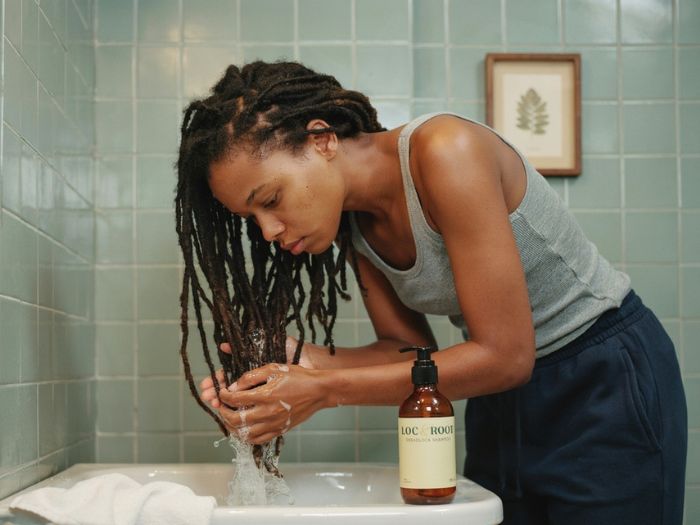
Have you ever washed your locs only to have them feel rough, dull, or strangely coated afterward?
You switch shampoos, hoping a different formula will solve the problem. You moisturize more often because your locs feel dry. Maybe you even start wondering if your favorite products have suddenly stopped working.
But what if the problem isn’t sitting on your bathroom shelf? What if it’s coming out of your shower head?
The water you wash your locs with every week can have a bigger impact on your hair than you may realize. While most conversations about healthy locs focus on oils, shampoos, or moisturizing routines, water quality is often overlooked. Yet the minerals naturally present in your tap water can influence how clean your locs feel, how easily products rinse away, and whether residue gradually builds up over time.
In this article, you’ll learn what hard and soft water actually are, why locs are especially prone to mineral buildup, and you’ll have a clearer understanding of how your water may be affecting your locs.
What Is Hard Water?
Hard water contains higher concentrations of minerals, primarily calcium and magnesium. These minerals are picked up as water moves through the ground. Neither mineral is harmful to your health. In fact, both are essential nutrients.
Hard water is safe to drink and, for many people, provides a small amount of their daily calcium and magnesium intake. However, because they carry a positive electrical charge, calcium and magnesium readily interact with soap, shampoo ingredients, and the outer surface of the hair shaft.
Water hardness is commonly measured in parts per million (ppm), which describes how much mineral content is dissolved in the water. The higher the ppm, the more minerals the water contains.
Imagine one million tiny drops of water. If 60 of those drops represented dissolved calcium and magnesium, the water would have a hardness of about 60 ppm.
According to the U.S. Geological Survey, water is generally classified as:
- 0–60 ppm: Soft
- 61–120 ppm: Moderately hard
- 121–180 ppm: Hard
- More than 180 ppm: Very hard
The ppm in water helps explain why two people can follow the exact same loc care routine and get completely different results.
What Is Soft Water?
Soft water contains very low concentrations of calcium, magnesium, and other minerals.
One of the biggest myths is that soft water is automatically “better” for your hair.
Soft water doesn’t moisturize your hair, repair damage, or make products more nourishing. What it does do is reduce the amount of calcium and magnesium left behind during washing. That often makes hair feel cleaner and allows shampoos to rinse more easily.
Another misconception is that soft water eliminates buildup altogether. While it reduces mineral buildup, it does not prevent product buildup. Heavy oils, waxes, butters, and styling products can still accumulate in locs regardless of the type of water you use.
Soft water can occur naturally, or it can be created through a water-softening system installed in a home.
Naturally Soft Water
Some parts of the country naturally have soft water because the local geology doesn’t contribute many hardness minerals. Rainwater is also naturally soft before it comes into contact with mineral-rich rocks or soil.
Naturally soft water typically allows soap and shampoo to lather more easily because there are fewer calcium and magnesium ions competing with the cleansing ingredients.
Artificially Softened Water
Many homeowners with hard water install a water softener to reduce mineral content before the water reaches their taps.
The most common type uses a process called ion exchange.
Rather than removing minerals completely, an ion exchange system swaps calcium and magnesium ions for either sodium or potassium ions. Because sodium and potassium don’t react with soap the same way calcium and magnesium do, the treated water behaves like soft water during washing.
Most residential water softeners use sodium chloride (salt) to regenerate the system, replacing hardness minerals with sodium ions.
Some homeowners choose potassium chloride instead. Potassium softeners work the same way but replace calcium and magnesium with potassium rather than sodium.
From a hair care perspective, both systems effectively reduce water hardness.
Hard Water Buildup vs. Product Buildup
If your locs feel heavy, look dull, or never seem completely clean, you’ve probably heard someone say, “It’s buildup.” But not all buildup is the same. Two common types of buildup affect locs:
- Mineral buildup from hard water
- Product buildup from the products you use
What Is Hard Water Buildup?
Hard water buildup, sometimes called mineral buildup, happens when naturally occurring minerals in your tap water remain on your hair after washing.
Like previously mentioned, the two minerals responsible for most water hardness are calcium and magnesium.
Over time, repeated washing in hard water can leave behind thin mineral deposits that gradually build up.
Think about the white residue that forms on shower doors, faucets, or inside a tea kettle. That’s the same type of mineral left behind after water evaporates. In a similar way, minerals can still accumulate on the hair shaft over time.
For people with locs, this is especially important because the dense, woven structure of a loc provides more places for minerals to remain trapped than loose strands of hair.
Signs of Mineral Buildup
One of the hardest parts about dealing with hard water is that the signs are not always obvious.
You usually don’t see calcium or magnesium sitting on your locs. Instead, you may notice changes in how your hair feels, how products behave, and how your locs respond after washing.
If you have mineral buildup, you may notice that your locs:
- Feel rough or slightly stiff
- Look dull instead of shiny
- Take longer to absorb moisture
- Don’t seem completely clean after washing
- Become more difficult to rinse
If hard water is contributing to the problem, you may also need a shampoo designed to remove mineral deposits, often called a chelating shampoo.
What Is Product Buildup?
Product buildup comes from the things you intentionally put on your locs.
Most store-bought hair products can leave residue behind, especially if they’re not water-based or water-soluble. Common contributors include:
- Heavy oils
- Butters
- Waxes
- Silicones
- Synthetic polymers that help products coat the hair
Signs of Product Buildup
Product buildup often looks different from mineral buildup. You may notice:
- A sticky or greasy feeling
- Visible residue inside the loc
- White flakes that don’t brush away
- A waxy coating
- Locs that feel heavy shortly after washing or moisturizing
If you have product buildup, there are three natural ways to remove it. Find my suggestions here!
| Hard Water Buildup | Product Buildup |
|---|---|
| Calcium & magnesium minerals | Oils, butters, waxes, silicones |
| Comes from your water | Comes from your hair products |
| Can make locs feel rough or dull | Can make locs feel greasy or coated |
| May require a chelating shampoo | Often removed with a clarifying shampoo |
| Can occur even if you use no products | Requires product use |
How to Prevent Hard Water Buildup in Locs
If you’ve discovered that your home has hard water, one of the first solutions you may hear about is to buy a shower filter.
Shower filters can be helpful, but many products are marketed in ways that make them sound more powerful than they actually are. The most important question is: What is the filter designed to remove? Because removing chlorine is not the same thing as removing hard water minerals.
Many common shower filters are designed to improve water quality by reducing substances such as:
- Chlorine
- Chloramine
- Sediment
- Certain odors or impurities
These filters can be beneficial, especially if your main concern is chlorine exposure. Chlorine is added to many municipal water supplies as a disinfectant. Some people find that chlorine can make their hair feel drier or more brittle because it can interact with the natural proteins and oils on the hair surface. However, chlorine is not what makes water “hard.”
Hard water requires a different type of filter, because it primarily comes from dissolved minerals. Most basic shower filters do not remove significant amounts of calcium and magnesium because those minerals are dissolved into the water itself.
To actually reduce water hardness, the treatment system needs to capture or exchange those mineral ions. This usually requires technologies such as:
- Ion exchange
- Reverse osmosis
- Specialized water-softening systems
A small filter attached to your showerhead generally does not have the capacity or technology needed to perform true water softening.
Common Types of Water Filters
KDF Filters
KDF (Kinetic Degradation Fluxion) filters are commonly used in shower filtration systems.
They use a mixture of copper and zinc to help reduce certain contaminants, especially chlorine, and may help control some microorganisms. However, it is not designed to remove large amounts of calcium and magnesium that cause water hardness.
A KDF shower filter may help with chlorine-related dryness, but it should not be expected to eliminate mineral buildup from hard water.
Activated Carbon Filters
Activated carbon is another popular filtration method.
Carbon is very effective at absorbing certain chemicals and improving taste and odor in drinking water filters. In shower filters, activated carbon can help reduce chlorine and some organic compounds.
However, activated carbon does not significantly remove calcium and magnesium hardness minerals.
While it improves some aspects of water quality, it does not turn hard water into soft water.
Vitamin C Shower Filters
Vitamin C filters are often marketed as a natural way to neutralize chlorine and chloramine.
Vitamin C can chemically react with chlorine, which is why it is used in some water treatment applications.
But like carbon and KDF filters, vitamin C does not remove calcium and magnesium. It helps with disinfectants, not water hardness.
What Removes Hard Water Minerals from Water?
If your goal is specifically reducing calcium and magnesium exposure, the most effective options are:
Ion Exchange Water Softeners
These systems replace calcium and magnesium ions with sodium or potassium ions.
They are the traditional solution for true water hardness.
Reverse Osmosis Systems
Reverse osmosis uses a membrane to remove many dissolved substances from water.
While effective, whole-house reverse osmosis systems are less common because they require more maintenance and can waste water.
Chelating Treatments
For hair care specifically, a chelating shampoo can help remove mineral deposits that have already accumulated on the hair.
This does not change your water, but it addresses the buildup left behind.
How to Remove Hard Water Buildup From Locs
Hard water buildup is a mineral problem. That means the most effective solution is one that targets minerals, specifically calcium and magnesium.
1. Chelating Shampoo
If you have significant hard water buildup, a chelating shampoo is the most effective option.
Unlike a regular or clarifying shampoo, a chelating shampoo contains ingredients specifically designed to bind to metal ions, such as calcium and magnesium, so they can be rinsed away. This process is called chelation.
Common chelating ingredients include:
- Disodium EDTA
- Tetrasodium EDTA
- Phytic acid
- Sodium citrate
- Citric acid (in some formulations)
These ingredients don’t just wash the hair. They chemically bind to mineral deposits, making them much easier to remove during rinsing.
Keep in mind that chelating shampoos are designed for occasional use, not every wash. Using them more often than necessary may leave your locs feeling dry, so it’s best to use them once every 2 to 3 months and adjust your loc routine as needed.
2. Apple Cider Vinegar
Vinegar contains acetic acid, which can help loosen certain types of residue, including some soap-related deposits. An acidic rinse may also temporarily smooth the hair surface, leaving locs feeling softer and looking shinier.
An ACV rinse may help:
- Remove some surface residue
- Reduce soap scum from traditional soaps
- Lower the pH of the rinse
- Improve how locs feel after washing
However, apple cider vinegar is not a replacement for a chelating shampoo.
Although acids can interact with minerals, household vinegar is not formulated to bind and remove calcium and magnesium deposits as effectively as dedicated chelating agents like EDTA.
If mineral buildup is mild, an occasional ACV rinse may improve the feel of your locs. If buildup has accumulated over months or years, it is unlikely to remove it completely.
For an ACV rinse, make sure to always dilute ACV. Start out with the following ratio: 2 tablespoons ACV to 1 cup water, and adjust as needed. Apply the rinse liberally after you’ve rinsed out the shampoo from your locs. Leave it on your scalp and locs for at least 5 minutes, and then rinse it off.
3. Distilled Water Rinses
Distilled water doesn’t remove existing mineral buildup, but it can help prevent additional buildup from forming.
Because distilled water has had nearly all dissolved minerals removed, using it as a final rinse means you aren’t depositing more calcium and magnesium onto your locs.
If you live in an area with very hard water, a distilled water rinse can be a helpful maintenance step after washing.
Frequently Asked Questions
Why does water hardness vary from one place to another?
The biggest factor is geology.
As groundwater travels through different types of rock, it dissolves varying amounts of minerals. Areas with large deposits of limestone, chalk, or dolomite typically have harder water because these rocks release calcium and magnesium more easily.
In contrast, regions with granite, volcanic rock, or abundant surface water often have naturally softer water because fewer hardness minerals dissolve into the water supply.
This explains why water quality can vary dramatically from one city, or even one neighborhood, to another. It’s largely determined by the natural landscape beneath the ground.
How does shampoo interact with hard and soft water?
Hard water makes shampoo a bit more difficult to lather. In this article, I highlight a vast number of common shampoos used by members of the loc community. For each shampoo, I break down each of the ingredients and discuss how hard and soft water interact with it.
Download the free shampoo guide here!
Is hard water bad for locs?
Hard water is not automatically harmful to locs, but it can contribute to mineral buildup over time.
Hard water contains minerals like calcium and magnesium that can remain on the hair surface after washing. In locs, these deposits may contribute to a rougher feel, dull appearance, or difficulty getting shampoo to lather properly. However, research does not show that hard water alone consistently causes severe structural damage to healthy hair.
Can hard water cause buildup in locs?
Yes, hard water can contribute to mineral buildup in locs.
When water evaporates, dissolved minerals can remain behind on the hair. Over time, repeated exposure may create a mineral film that changes how your locs feel and respond to products.
Mineral buildup is different from product buildup, which comes from oils, butters, waxes, and styling products.
Does soft water make locs greasy?
Soft water does not make locs greasy, but it can make products rinse differently.
Because soft water contains fewer calcium and magnesium minerals, shampoos and soaps typically lather more easily and rinse away more effectively. However, greasy locs usually come from using too much product or using ingredients that are too heavy for your hair, not from soft water itself.
Is rainwater soft?
Fresh rainwater is naturally soft because it contains very few dissolved minerals when it first forms.
However, collected rainwater can pick up contaminants from roofs, storage containers, and the environment. If someone chooses to use rainwater for washing locs, proper collection and filtration are important.
Can hard water make locs smell?
Hard water does not directly create odor. When minerals combine with product residue, oils, sweat, and environmental debris, buildup can accumulate more easily. Locs that hold onto residue or stay damp for long periods may develop unpleasant smells.
Proper washing and thorough drying remain the most important factors for preventing odor.
How often should you use a chelating shampoo?
There is no universal recommendation for using a chelating shampoo because it depends on your water hardness and washing frequency.
Someone with very hard water may need a chelating treatment occasionally (once every 2 to 3 months), while someone with soft water may rarely need one. Using a chelating shampoo too often can unnecessarily remove oils and leave hair feeling dry.
Is apple cider vinegar enough to remove hard water buildup?
Apple cider vinegar may help with certain types of residue, but it is not considered a replacement for a dedicated chelating treatment.
Vinegar contains acetic acid, which can help adjust pH and loosen some buildup. However, chelating ingredients such as EDTA are specifically designed to bind metal ions like calcium and magnesium.
For significant hard water buildup, a properly formulated chelating shampoo is generally more effective.
Does a shower filter remove hard water minerals?
Most shower filters do not significantly reduce hard water minerals like calcium and magnesium.
Many shower filters are designed to reduce chlorine, chloramine, and sediment. True water softening usually requires technologies such as ion exchange or other specialized treatment systems.
A shower filter may improve some aspects of water quality, but it does not necessarily solve hard water buildup.
Download the 8 Dreadlock Moisturizer Spray Recipes!
Please fill out the form to receive the download in your inbox.

If there’s an error or the download doesn’t come through, send me a message at book@dreadlockulture.com and I will happily send it to you. 🙂